In a time when digital transformation is reshaping every corner of the globe, one of the most remarkable changes is happening quietly in rural areas of countries like Bangladesh, India, Nepal, and Pakistan — where YouTube is revolutionizing education. With limited access to quality teachers, outdated textbooks, and overcrowded classrooms, students in rural communities are increasingly turning to YouTube learning channels to supplement or even replace traditional schooling.
Thanks to the rise of affordable smartphones and expanding 4G networks, even in remote villages, platforms like YouTube have become virtual classrooms. Students can now watch free, high-quality educational content from renowned platforms such as Khan Academy, Ten Minute School, Unacademy, BYJU’S, and Exam Preparation BD. These channels offer lessons in mathematics, science, language learning, general knowledge, and test preparation — all delivered in engaging formats and often in regional languages like Bangla, Hindi, or Tamil. This accessibility has democratized learning, removing barriers of geography, cost, and availability of trained educators.
Key Statistics:
68% of rural students in Bangladesh with access to smartphones report using YouTube for educational purposes (Digital Inclusion Survey, 2024).
Ten Minute School boasts over 3 million subscribers and provides over 10,000 free video lectures aligned with Bangladesh’s national curriculum.
In India, Unacademy and BYJU’S serve over 50 million students, with significant growth in rural user bases.
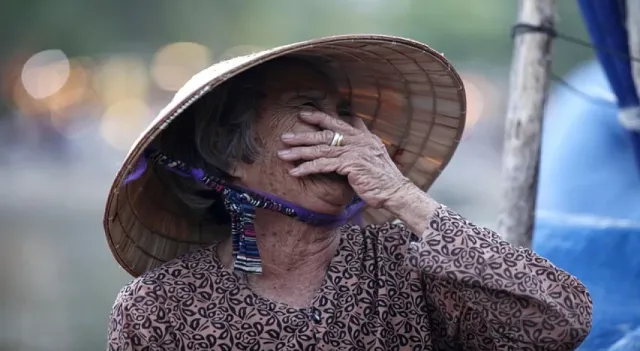
For students like Mim Akter, a ninth grader from rural Khulna, this shift is life-changing: “Our school lacks science teachers. Now I watch chemistry classes on YouTube in the evenings. I never thought I’d understand atoms and molecules this way.” Similarly, in places where power cuts and poor infrastructure often halt schooling, students can download lessons offline, watch at their own pace, and replay concepts until fully understood. YouTube allows asynchronous learning, letting students learn when and how they want — something especially important for girls and working youth who cannot attend school full-time. YouTube learning channels are also addressing practical skill-building. Rural youth are learning computer literacy, graphic design, agricultural tips, tailoring, and even small business skills. Channels like Krishi Sheba BD help farmers with crop rotation, organic pesticide methods, and seasonal crop planning, while others teach computer skills and mobile repair — skills that directly improve livelihoods.
Popular Learning Topics in Rural Areas via YouTube:
SSC & HSC Exam Preparation
Basic English Speaking and Writing
Science Experiments and Visual Learning
Government Job Test Prep (BCS, Bank, Railway)
Computer Basics and Freelancing Skills
Agricultural Training and Farming Methods
But this progress doesn’t come without concerns. Experts warn of digital fatigue, misinformation, and distraction. Not all content is credible, and rural learners — often new to the internet — may fall prey to low-quality or misleading videos. To counter this, digital literacy training and school-supported content curation are becoming essential. Schools and NGOs are beginning to integrate curated YouTube playlists into classroom routines to ensure content relevance and safety. Policy experts and educators are now calling for formal integration of digital tools into rural education policies. Many suggest partnerships between national education boards and popular learning channels to certify content, track learning progress, and provide internet subsidies to disadvantaged students.
Despite these challenges, YouTube has become an equalizer — a bridge over the urban-rural education divide. It has opened up new paths for self-learners, dropouts, and underserved youth, empowering them to dream beyond their limitations. In regions where education once seemed like a privilege, YouTube is now the teacher, the classroom, and the library — all rolled into one.
Supporters of BNP leader Ishraque Hossain continued their sit-in for the fifth consecutive day today, demanding his swift swearing-in as the mayor of Dhaka South City Corporation (DSCC).
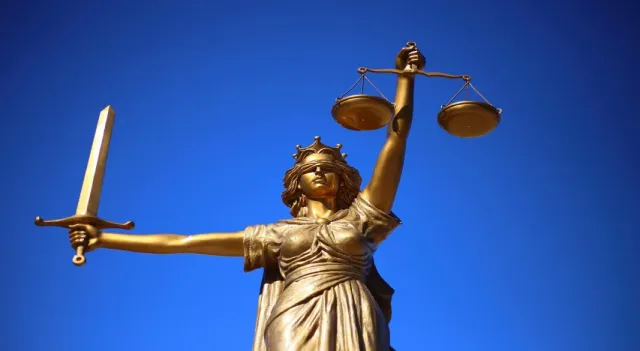
The U.S. Supreme Court issued a landmark ruling on Monday, declaring that former presidents are entitled to partial immunity from criminal prosecution for actions taken while in office. The 6-3 decision, split along ideological lines, has triggered intense political and legal debate across the country.The ruling stems from charges brought against former President Donald Trump, who has faced multiple indictments related to alleged interference in the 2020 presidential election and events surrounding the January 6 Capitol riot. The Court’s decision now makes it more difficult for prosecutors to pursue charges for actions deemed as part of a president's official duties. Divided Reactions President Joe Biden responded to the ruling by calling it a “dangerous precedent” that could place future presidents above the law. “No one in America should be beyond accountability,” he said during a press conference.Republican leaders, however, welcomed the decision. House Speaker Steve Scalise stated, “This ruling upholds the constitutional separation of powers and protects the office of the presidency from political attacks.”The recent Supreme Court ruling on presidential immunity has ignited intense debate across the United States, with sharp divisions emerging among legal experts, lawmakers, and the public. The decision, which sets new boundaries on the legal protections afforded to sitting presidents, has far-reaching implications for the balance of power and accountability in government. Supporters argue that the ruling upholds the integrity of the executive office by protecting it from politically motivated prosecutions, while critics warn that it could open the door to unchecked presidential authority. What the Ruling Means The Court ruled that while presidents do not have absolute immunity, they are shielded from criminal prosecution for actions that are “within the outer perimeter of official presidential responsibilities.” However, personal or unofficial actions remain subject to prosecution.Legal experts say the ruling could delay several of Trump’s ongoing legal cases, potentially impacting the 2024 election season, where Trump remains the leading Republican contender. As protests, press conferences, and panel discussions erupt nationwide, the ruling is expected to influence upcoming elections and reshape the legal landscape surrounding executive power for years to come. Public Response The recent Supreme Court ruling on presidential immunity has ignited intense debate across the United States, with sharp divisions emerging among legal experts, lawmakers, and the public. The decision, which sets new boundaries on the legal protections afforded to sitting presidents, has far-reaching implications for the balance of power and accountability in government. Supporters argue that the ruling upholds the integrity of the executive office by protecting it from politically motivated prosecutions, while critics warn that it could open the door to unchecked presidential authority. As protests, press conferences, and panel discussions erupt nationwide, the ruling is expected to influence upcoming elections and reshape the legal landscape surrounding executive power for years to come.
Iran and Israel traded further air attacks on Thursday as President Donald Trump kept the world guessing about whether the United States would join Israel's bombardment of Iranian nuclear facilities. Google News LinkFor all latest news, follow The Daily Star's Google News channel. A week of Israeli air and missile strikes against its major rival has wiped out the top echelon of Iran's military command, damaged its nuclear capabilities and killed hundreds of people, while Iranian retaliatory strikes have killed two dozen civilians in Israel. Iran and Israel traded further air attacks on Thursday as President Donald Trump kept the world guessing about whether the United States would join Israel's bombardment of Iranian nuclear facilities. Guardian council warns US of 'harsh response A key Iranian body warned the United States on Thursday that any intervention in support of its ally Israel would be met with a "harsh response". "The criminal American government and its stupid president must know for sure that if they make a mistake and take action against Islamic Iran, they will face a harsh response from the Islamic Republic of Iran," the Guardian Council said in a statement carried by state television. Google News LinkFor all latest news, follow The Daily Star's Google News channel. A week of Israeli air and missile strikes against its major rival has wiped out the top echelon of Iran's military command, damaged its nuclear capabilities and killed hundreds of people, while Iranian retaliatory strikes have killed two dozen civilians in Israel. Guardian council warns US of 'harsh response' if it intervenes. A key Iranian body warned the United States on Thursday that any intervention in support of its ally Israel would be met with a "harsh response". "The criminal American government and its stupid president must know for sure that if they make a mistake and take action against Islamic Iran, they will face a harsh response from the Islamic Republic of Iran," the Guardian Council said in a statement carried by state television.
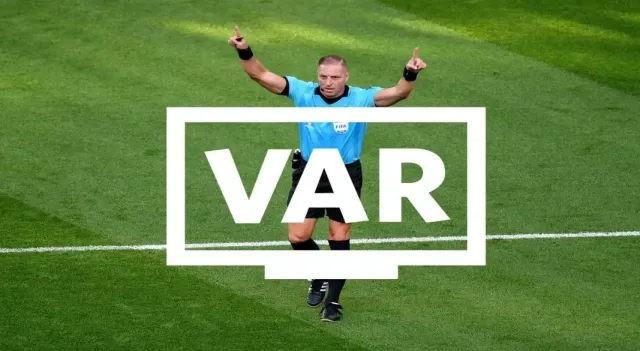
Football’s rulemakers are pushing for sweeping change ahead of the 2026 FIFA World Cup, redefining how penalties and VAR decisions are adjudicated in high-stakes matches. The centerpiece proposal: abolish penalty rebounds. Under the new rule, once a penalty kick is taken—regardless of outcome—play would end immediately. Any rebound off the keeper or post ends in a goal kick awarded to the defensive team. Proponents say this mirrors shoot-out clarity, resolves VAR encroachment retakes, and reduces contentious second-chance controversy. Talk Sport Channel In a startling revelation, the CEO of a prominent "rent-a-crowd" agency has lifted the lid on the booming U.S. protest industry, exposing how political movements, corporate interests, and influencers routinely pay to stage large-scale demonstrations. Speaking anonymously, the executive detailed how thousands of actors and extras are hired to pose as passionate activists, boosting media coverage and swaying public opinion. From climate rallies to anti-corporate marches, these manufactured protests are meticulously choreographed, with participants receiving scripts, signs, and hourly pay. The disclosure raises serious ethical questions about authenticity in civic movements and the manipulation of democratic discourse. Simultaneously, VAR’s purview may expand significantly: future iterations would allow reviews of second yellow cards and corner-kick decisions, expanding beyond current limits that restrict it to straight red incidents. These changes aim to improve fairness but raise concerns over game flow and the human dynamic on the pitch. Talksport critics, including talkSPORT pundit Alan Brazil, labeled the proposals “a load of tosh,” arguing such regulation shifts remove nuance and over-engineer natural gameplay. Another theoretical change under consideration—Arsène Wenger’s “daylight offside rule”—would require attackers to be fully separated from defenders to be ruled onside, increasing objectivity but potentially changing traditional offside dynamics. Talksport These reforms also address double-touch penalties, stipulating retakes rather than awarding goals where infringement occurs, such as the incident with Julian Álvarez in last season’s Champions League. All measures are subject to ratification by February 2026 to take effect during the World Cup. Talksport. Should these rule changes pass, they would redefine football officiating—from grassroots leagues adopting new penalty protocols to elite matches experiencing altered stoppage patterns and VAR triggers.The potential implications are vast: strategic behavior, coach tactics during penalty sequences, and player conduct under intensified replay scrutiny could all shift. With the World Cup on the horizon, football’s global governing body may soon pivot action from debate to implementation.
As soon as he hears the news of someone's death, he rushes to the graveyard on horseback with his required tools. Like a special companion on the final journey of a person, the 67-year-old extends his sincere hands. In a heartbreaking twist of fate, the faithful companion of gravedigger Manu Mia was killed yesterday, while Manu himself remains hospitalised, battling for his life. The 65-year-old Manu Mia, a familiar figure in the community for over four decades, has long been known for his humble service digging graves and transporting bodies in his modest wooden cart, drawn by his beloved horse, Shonar Pakhi. Residents say the bond between Manu and the gentle brown mare was unlike any they had seen—a relationship forged through hardship, routine, and deep affection. Manu was admitted to the hospital last week following complications from a respiratory illness. “He kept asking about the horse even from the hospital bed,” said his nephew, Rafique Mia. “He didn’t want her left alone.” Tragedy struck yesterday morning when Shonar Pakhi was struck and fatally injured by a speeding motorbike near the village graveyard. Witnesses said the horse had broken loose from her makeshift rope tether and was calmly walking toward the graveyard entrance, perhaps out of instinct. “She was not just a horse; she was family,” said Rahima Begum, a long-time neighbour. “That animal had pulled hundreds of funeral carts, always steady, always calm. To see her die like this, without her owner even knowing yet—it’s just too much.” The rider of the motorbike fled the scene, and police say they are investigating the hit-and-run incident. So far, no arrests have been made. News of the horse’s death has not yet been shared with Manu, who remains in critical but stable condition. Family members are struggling with how to break the devastating news. Locals have expressed shock and sorrow, with many calling for better enforcement of road safety rules in the area. A small vigil was held near the graveyard last night, where residents lit candles and shared memories of the old gravedigger and his loyal horse. “Manu Mia’s work was never glamorous, but he did it with dignity,” said Abdul Karim, a community elder. “Now, while he fights for his life, he has lost the only creature who stood by him through every sorrowful journey. It’s a tragic chapter in a quiet man’s life.”